28 July 2016

Hare's-tail at Port Eynon

Hare's-tail growing abundantly on the dunes at Port Eynon (SS469851) 4th June 2007
Charles' recent discovery of Annual Beard-grass Polypogon monspeliensis near Crynant reminded me of my encounter with the superficially similar Hare's-tail Lagurus ovatus at Port Eynon back in 2007. The species was growing in abundance through one section of dunes with many thousands of plants, and although I've been back to the site in more recent times (casual visits rather than dedicated searches) I've failed to find it since. The Crynant Annual Beard-grass and the Port Eynon Hare's-tail are the only records we have of these attractive casuals in West Glamorgan.

27 July 2016

Annual Beard-grass

Annual Beard-grass (Polypogon monspeliensis) in roadside verge, Crynant

Recently I came across this attractive grass in a disturbed roadside verge near Crynant. Annual Beard-grass (Polypogon monspeliensis) is a south western European species which reaches its northern limit as a native species in south east England, where it grows on coastal grazing marshes. However, it also occurs sporadically as a casual alien species on disturbed (waste) ground and rubbish tips further west in Britain and as far north as Scotland. It is quite rare in Wales, but it has appeared in the docklands of Newport and Barry in the past. Outside its native range it probably originates as a bird seed alien or garden escape. It also occurs as an alien in North America where it is sometimes called Rabbit's-foot Grass and has pest status. The plants shown here were growing with a respectable cohort of weedy species such as Scented Mayweed (Matricaria recutita), Spear-leaved Orache (Atriplex prostrata), Lesser Swine-cress (Coronopus didymus), Shepherd's Purse (Capsella bursa-pastoris), Redshank (Persicaria maculosa), Hoary Mustard (Hirschfeldia incana) and others. Beard-grass is so named because of the long awns that are so conspicuous in its inflorescence,

 Inflorescences of Annual Beard-grass (Polypogon monspeliensis) with long, bristly awns


19 June 2016

A few more bugs for the BAY-less!


26 May 2016

Sawflies

Another one for any bug lovers who don't get the BAY magazine.


25 May 2016

Fungus at Prior's Wood

I could hardly miss this striking fungus growing on a dying oak yesterday. About 8 inches wide. Can someone give me a name for it please as I'm afraid I don't have any fungi books. Thanks.

15 May 2016

Warty Cavalier

Melanoleuca verrucipes, Glantawe Riverside Park

There's a very interesting suite of fungi that grow on wood-chip (and mulch), many of which are recent additions to the British fungal 'flora'. I've already posted photos of Agrocybe rivulosa (21/1013) which was first recorded in Britain in 2004 and is now quite widespread. The Warty Cavalier (also called Warty Knight) shown here was growing on a wood-chip pile in Glantawe Riverside Park, near Pontardawe. It's new to me and possibly a first record for Wales - I'm sure somebody will know.  It was first identified in Britain in 2000.
Melanoleuca species are often a bit of a nightmare to identify, but this one is relatively easy. It looks a bit like a mushroom, but the slightly decurrent gills are white and remain white (the spores are white) and are not covered in a veil when immature. Mushroom gills go black at maturity when they produce millions of black spores. Also, unlike a mushroom, Warty Cavalier doesn't have a ring on the stipe, but look for the splattering of black scales (see photo below), a very useful distinguishing feature.

Black scales on stipe of Melanoleuca verrucipes

10 May 2016

just a couple of local shots. 2 grasshopper warblers holding territory near Grovesend only a few hundred metres apart.
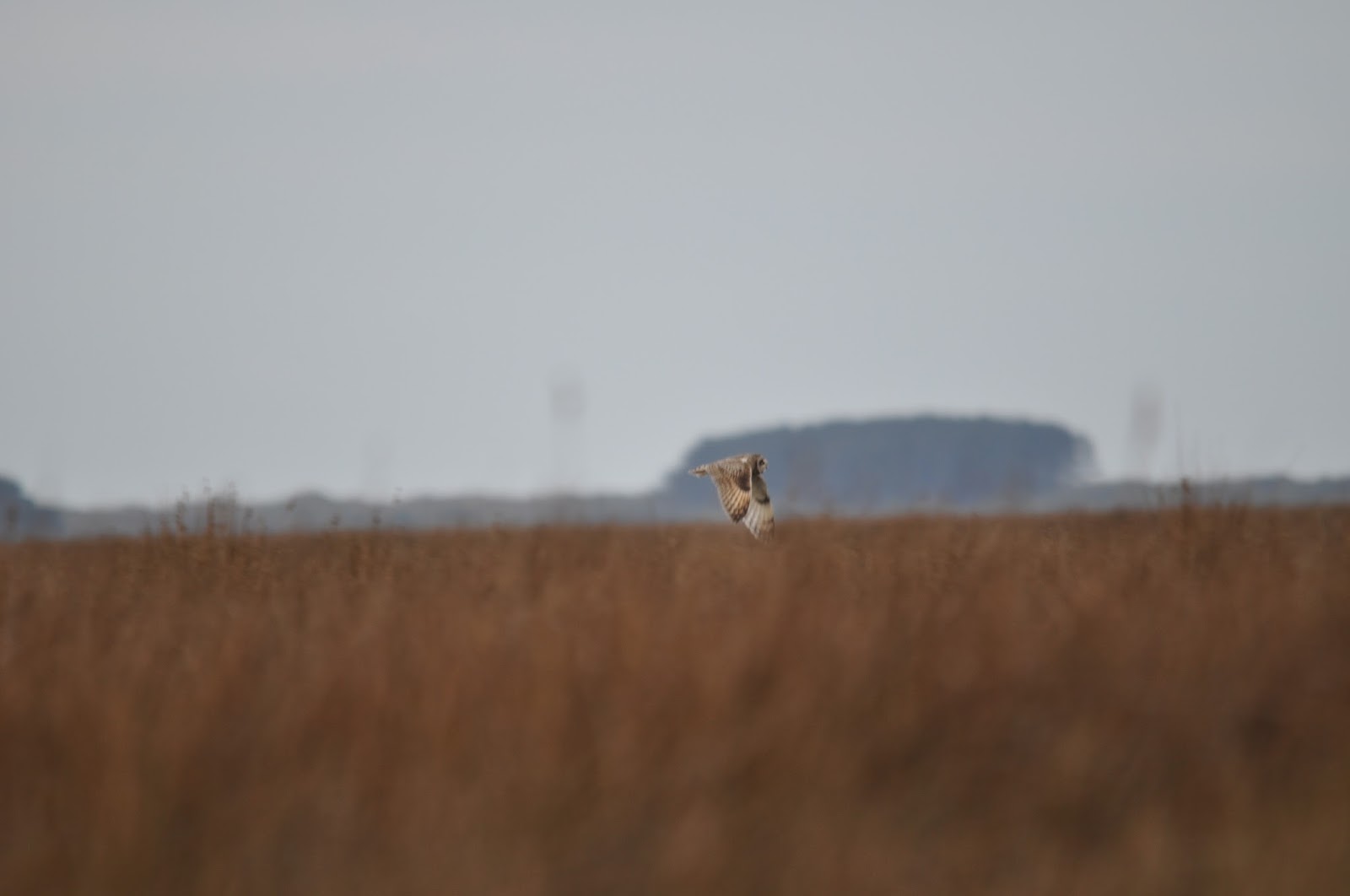
the second shot is one of two Short eared owls which are still around Llanrhidian marsh showing well upto mid morning