
28 November 2012

26 November 2012
Juniper, Butcher's Broom and a very small moss
 |
| cliffs between Horton and Slade where Juniper, Butcher's Broom and Starke's Pottia grows |


 |
| Juniper |
 |
| Butcher's Broom |
In the same habitat the tiny Starke's Pottia (Microbryum starckeanum) was found fruiting this weekend. This is an uncommon species that likes thin lime-rich soils and the height of these plants, including capsules, is less than 5mm. Note the tiny basal rosette of leaves are mostly hidden by the leaves of larger species in the photo below.

23 November 2012
Polypody sp at Crawley Bluff


 |
| distribution of Southern Polypody |
 |
| distribution of Western Polypody |

Nearby, bryophytes growing in profusion on a damp north-facing dune cliff included Wall Scalewort (Porella platyphylla) and Long-beaked Thyme-moss (Plagiomnium rostratum).
 |
| Wall Scalewort |
 |
| Long-beaked Thyme-moss |
22 November 2012
Gower Ornithological Society AGM
 |
| (c) M. Hipkin |
09 November 2012
Is the Ash destined to follow the Elm and the Larch?

This magnificent Dutch Elm (Ulmus x hollandica), with a 4.05m girth, standing at the entrance to Rhydgoch Cemetery in Pontarddulais, clearly has suffered little ill effect from the ravages of Dutch Elm Disease. One of the reasons why English Elm (U. procrea) is said to have been so badly affected during the outbreak in the 1970’s was the lack of genetic diversity - the species does not to reproduce well sexually, being largely cloned from limited stock brought in during Roman times. By way of contrast, the Ash is far more sexually active. A higher level of genetic diversity should in theory improve the chances of more trees being resistant to the pathogenic effects of the fungus Chalara fraxinea, but predicting the level of impact it will have on our Ash woods and specimen trees seems likely to remain a subject of much debate. The best article I have seen so far on this topic can be found from the following link: Ash Dieback BSBI
With the dramatic reduction of Larch and now possibly Ash from our landscape, interesting times lie ahead. What will the status of the Gower Ash Woods Special Areas of Conservations be in 10 or 20 years time? I remain optimistic there will still be a lot of interest there - deadwood invertebrates could be worth studying before the situation changes!
The Kingfisher
 |
| Adult male has all black bill |
Here in Gower, now is one of the best times to see these great little birds, there are two main reasons for this; the first being that many of the inland birds move down to the coast for the winter, where the temperature can be one or two degrees higher, this may not sound like much but it can make the difference between the water ways freezing or not, which to a kingfisher may mean life or death, the second is simply with the loss of leaves and the die back of water side vegetation they are just easier to spot.
 |
| Female has orange lower mandible |
So next time you’re out and about near any of our local waters and you catch a glimpse of this wonderful bird, take the time and find somewhere out of the way, sit down quietly, watch and wait, you may be there for some time, but not always and if you are lucky enough to see a Kingfisher at close quarters it's something you will never forget.
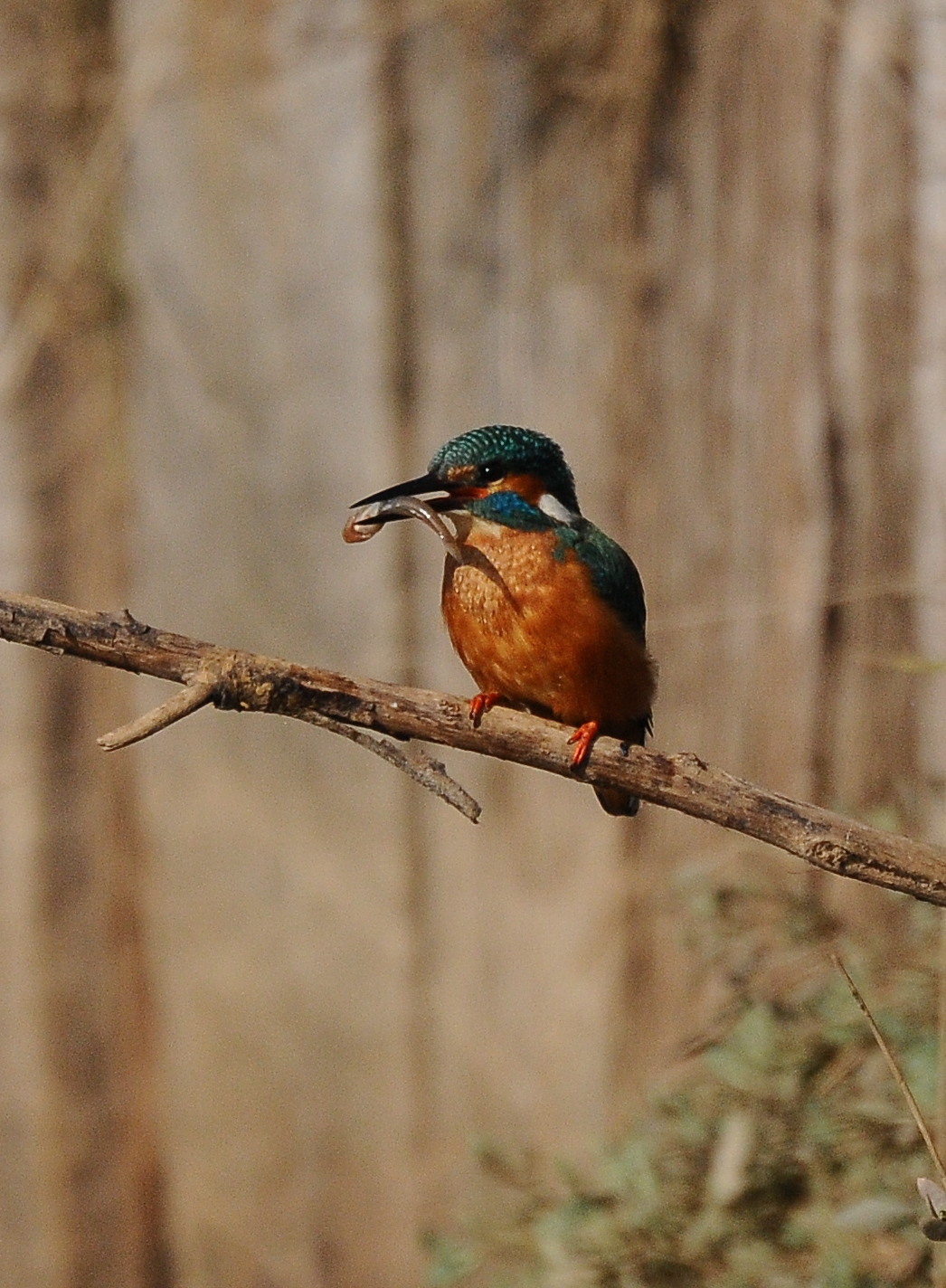
All photos (c) Paul Tyrrell
08 November 2012
Larch.... the swan song ?

There are some spectacular autumn colours this year and larch, which never disappoints, is particularly striking in the Neath and Afan Valleys at the moment. The photo above was taken today, looking west down the River Afan towards Rhyslyn near Pontrhydyfen. I love the way the golden larch canopies bring the darker coloured spruces and pines into relief. None of the other conifers in our plantations support such a rich biodiversity of plants and lichens. These deciduous forests have been a sanctuary for wood warblers, a surrogate home for bluebells and usually become carpeted with bryophytes more typical of upland oak woodland as they mature. The light and 'airy' nature of larch woods also provides ideal conditions for lichens, like Parmelia perlata (below) and Usnea subfloridana which often cover the twigs and branches.

And even in a poor year for toadstools, there's always some Larch Bolete (Suillus grevillei) to be found.

If you take a drive along the A465 to Glyn Neath, you'll get a good picture of the amount of larch forest that is bedded into the Neath Valley. Its removal (or death) will reveal a radically different landscape - you don't know what you've got 'til it's gone!
Forty years ago I had mixed feelings (mostly negative) about conifer plantation, but larch has melded gracefully into the local environment. I will miss this.
Subscribe to:
Posts (Atom)